

Pharmaceutical Organic Chemistry
The chemical language of drug design — from atomic structure and bonding through functional groups and reaction mechanisms to stereochemistry and its critical role in pharmacological activity.
Unit 1: Unit 1: Basic Concepts
Atomic orbitals, hybridisation (sp, sp², sp³), covalent bonding, resonance, inductive and mesomeric effects, electronegativity, acids and bases in organic chemistry, and IUPAC nomenclature.
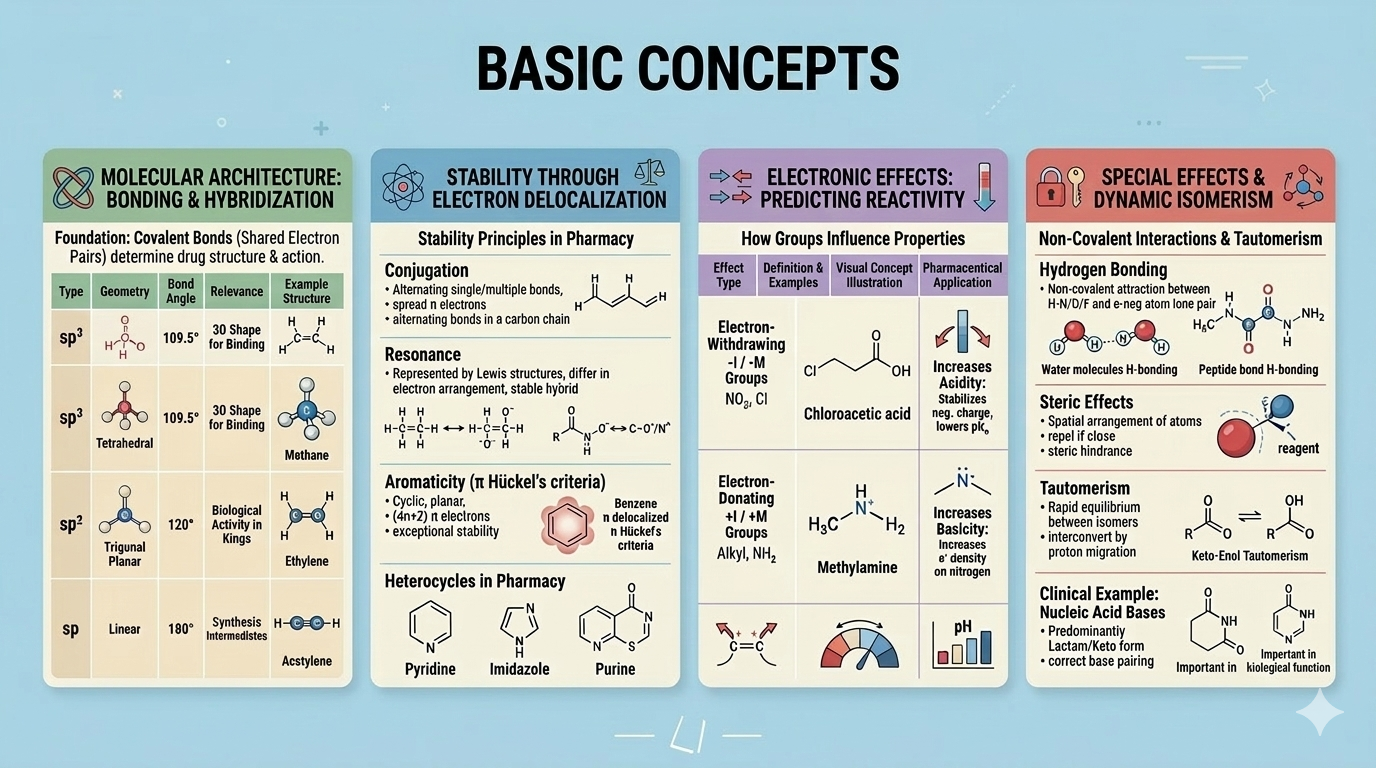
Unit 1: Basic Concepts
Atomic orbitals, hybridisation (sp, sp², sp³), covalent bonding, resonance, inductive and mesomeric effects, electronegativity, acids and bases in organic chemistry, and IUPAC nomenclature.
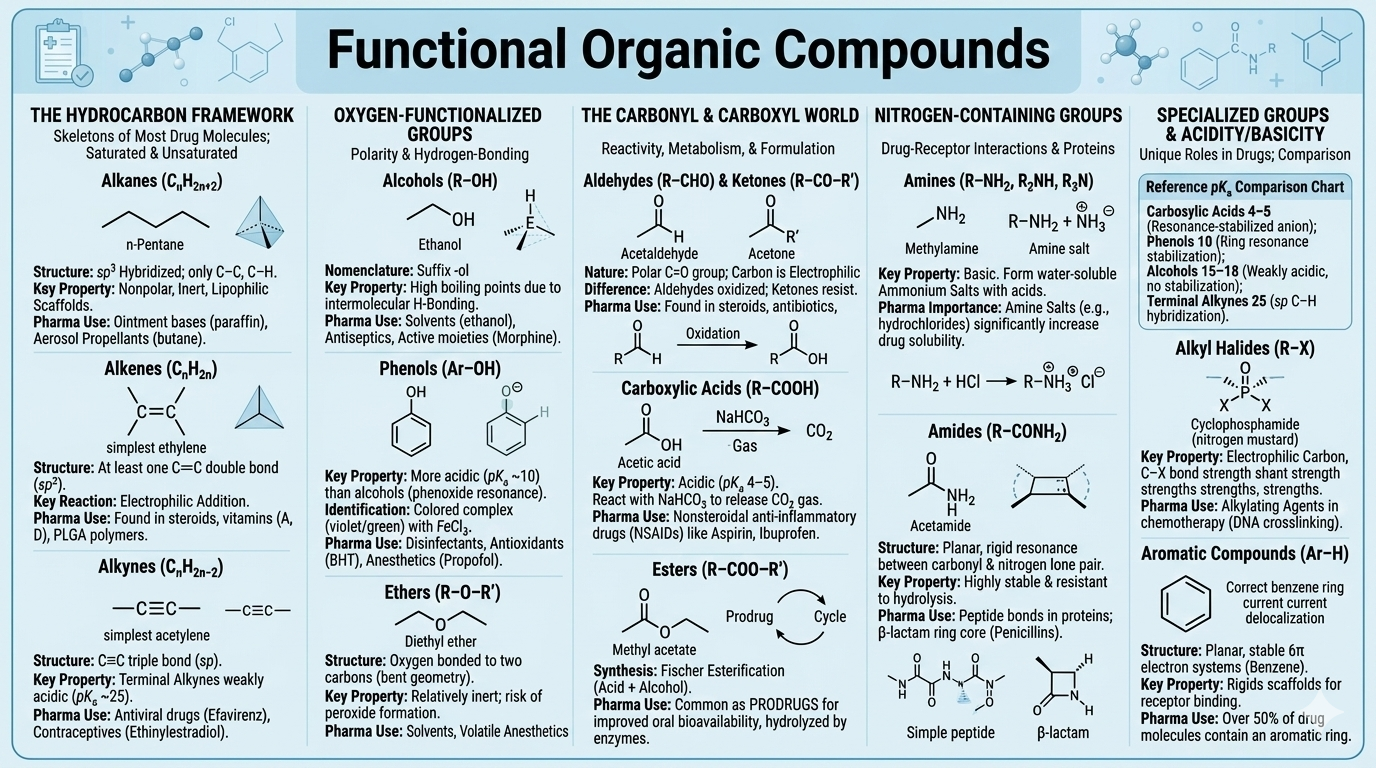
Unit 2: Functional Organic Compounds
Hydrocarbons, alkyl halides, alcohols, phenols, ethers, aldehydes, ketones, carboxylic acids, esters, amines, and amides — structures, properties, and pharmaceutical relevance.
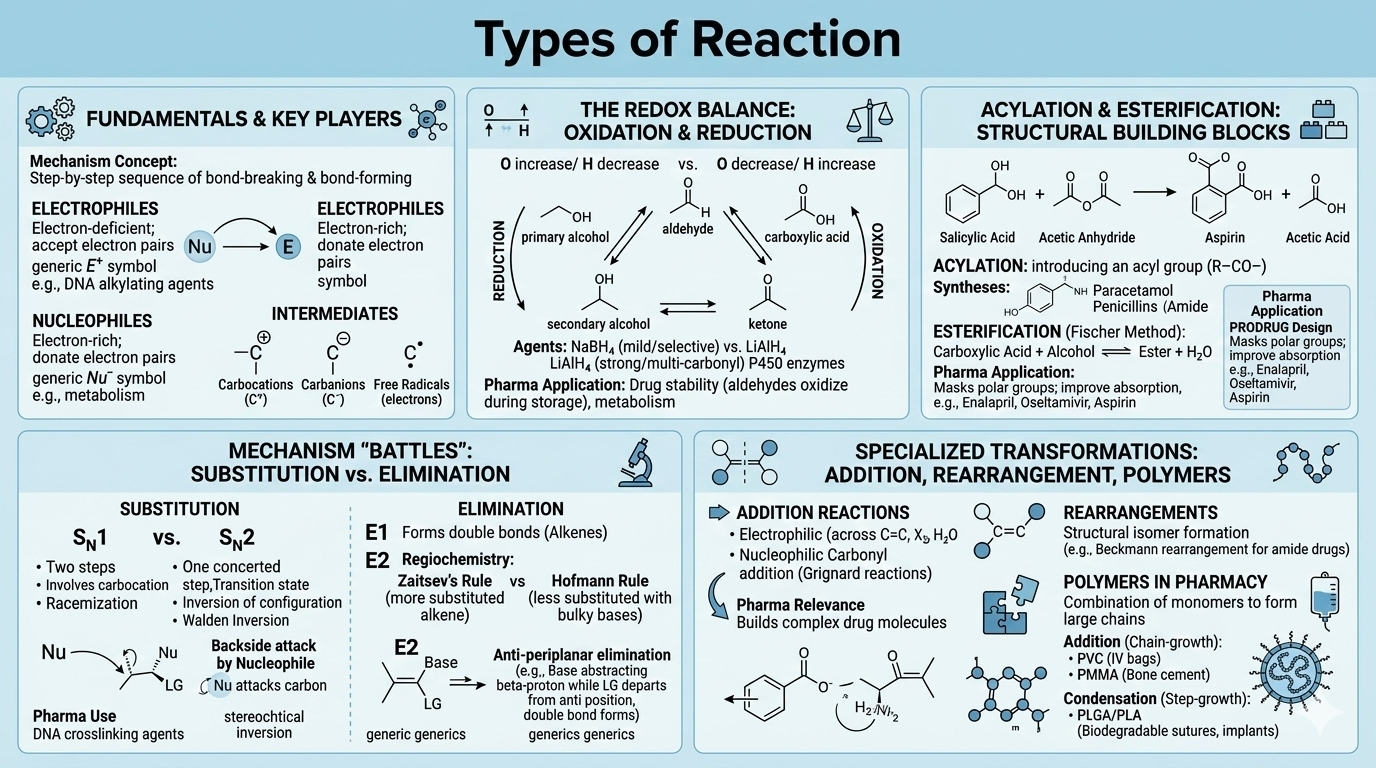
Unit 3: Types of Reactions
Substitution (SN1, SN2), elimination (E1, E2), addition, condensation, and oxidation-reduction reactions. Reaction mechanisms, intermediates, energy diagrams, and catalysis.
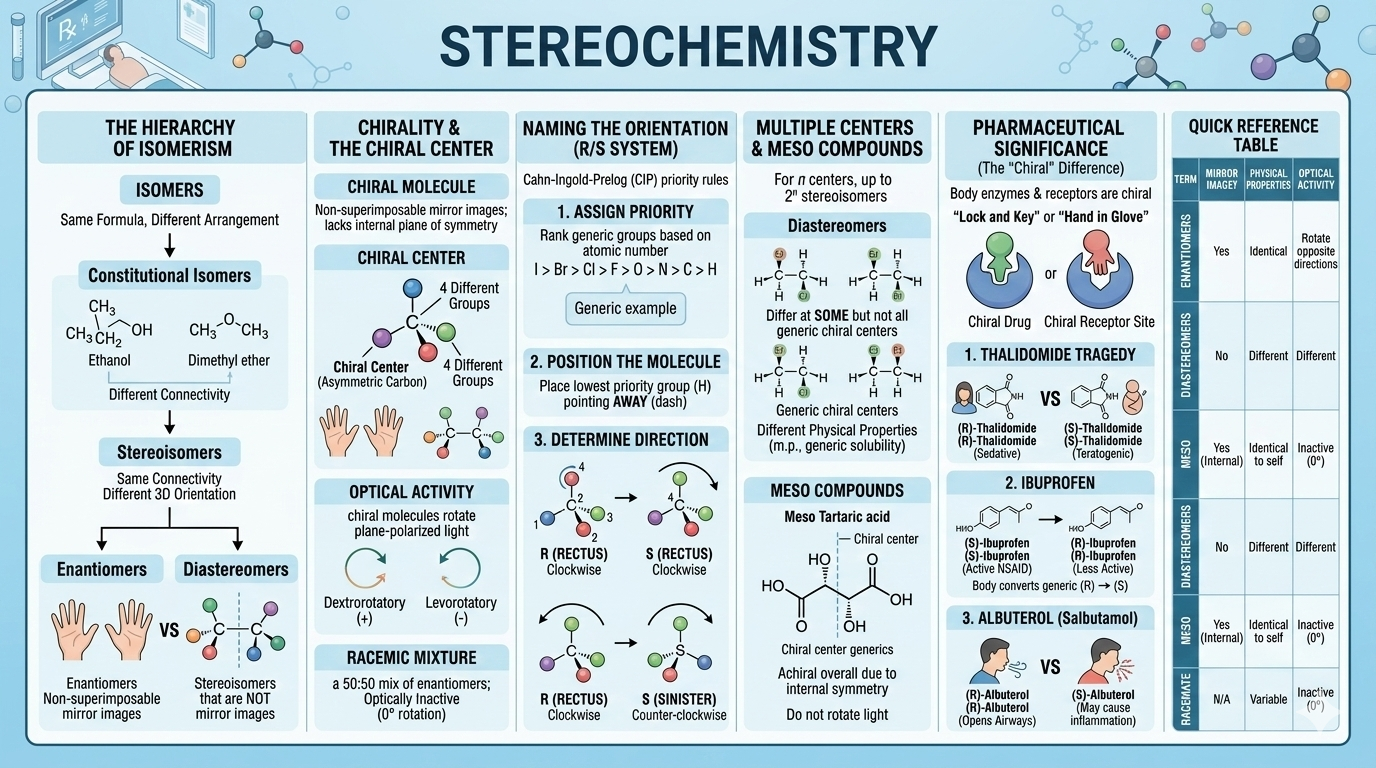
Unit 4: Stereochemistry
Chirality, enantiomers, diastereomers, R/S and E/Z configuration, optical activity, racemic mixtures, meso compounds, and the pharmacological significance of stereoisomerism in drug action.