
NaturalToxins
A comprehensive study of toxins occurring in nature — from higher and lower plants to fungi, animals, and marine organisms — covering their chemistry, mechanisms of toxicity, and strategies for prevention and control.
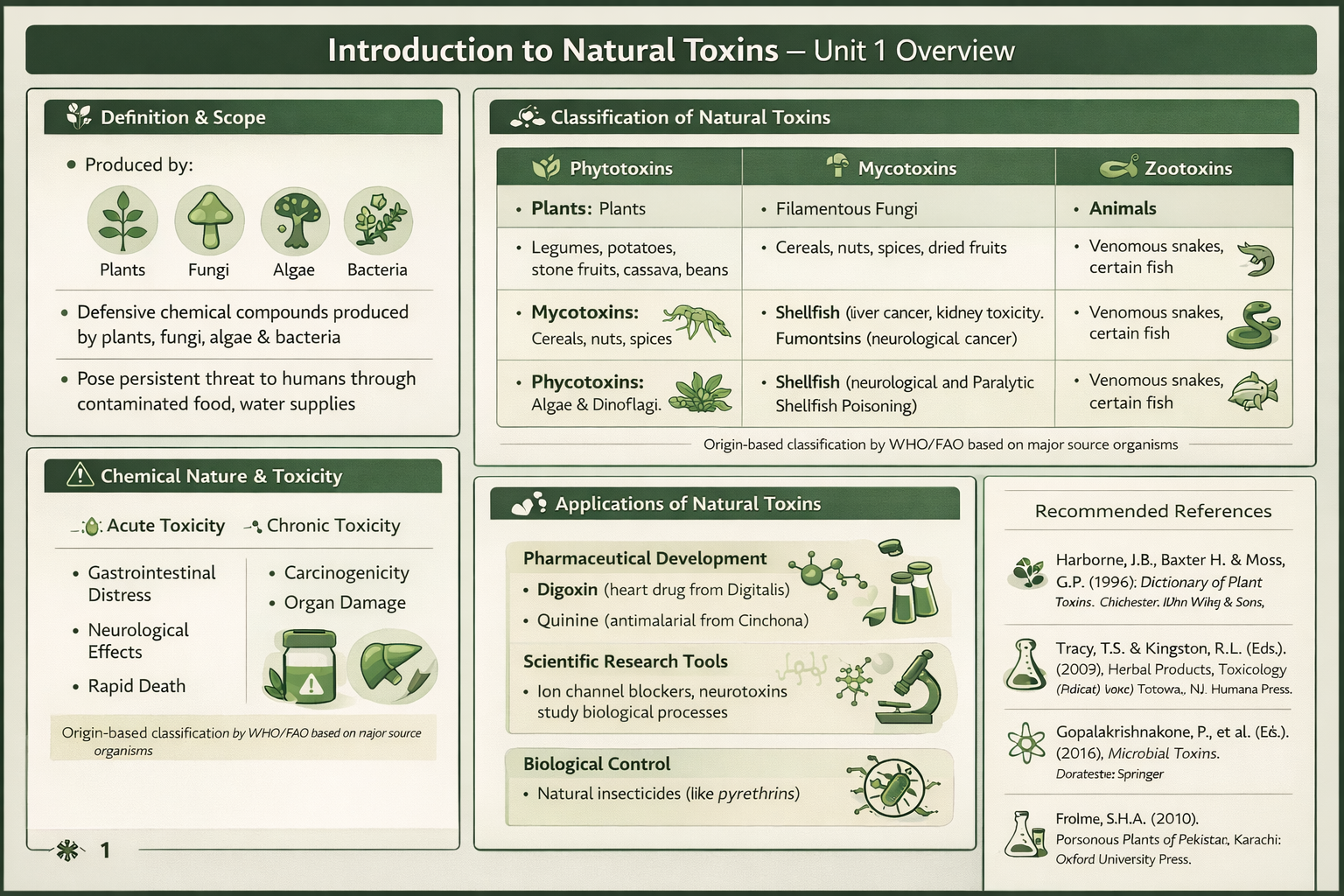
Introduction to Natural Toxins
Definition and scope of toxicology, classification of natural toxins, dose-response relationships, ADME of toxins, and the historical role of natural poisons in medicine and pharmacy.
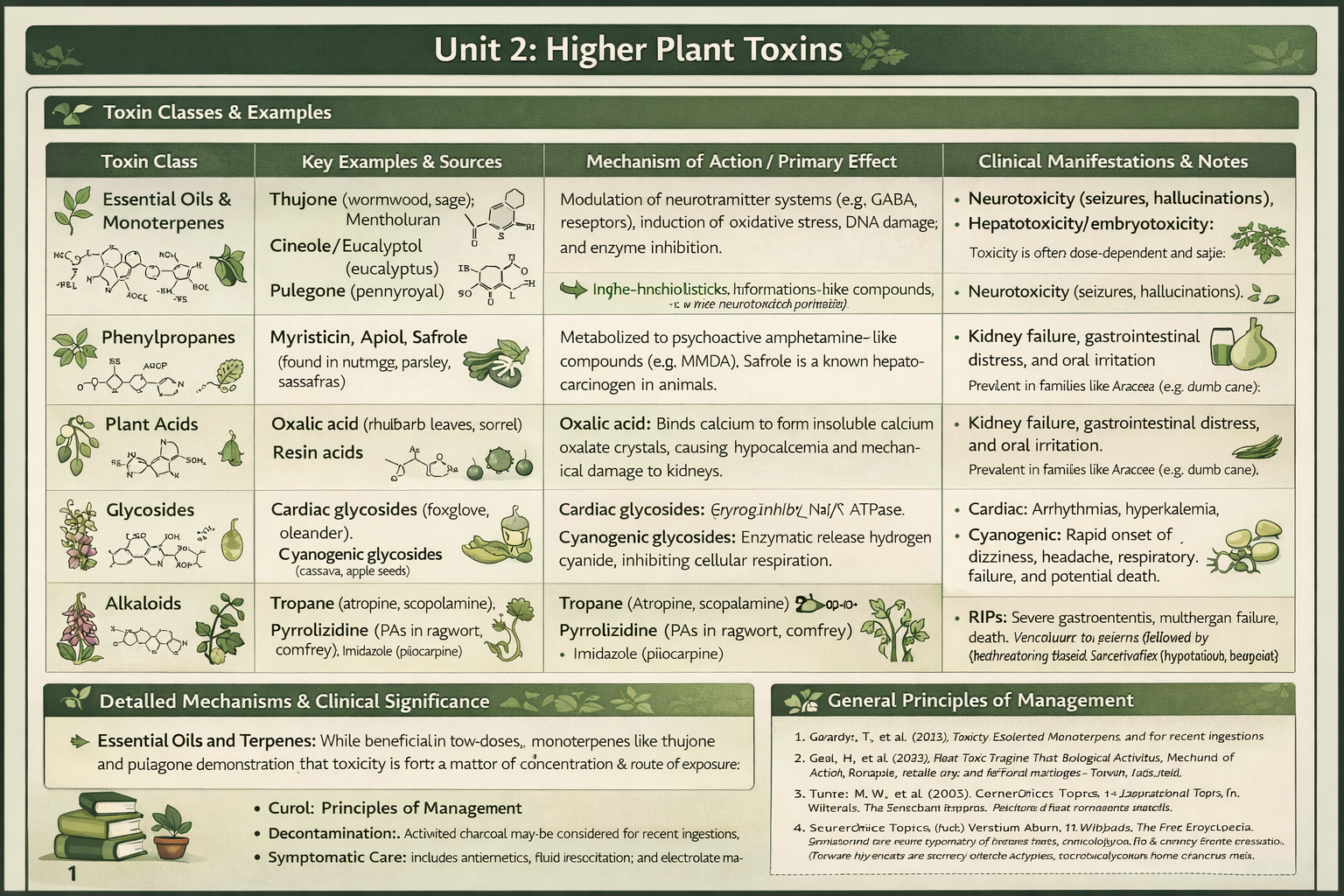
Higher Plant Toxins
Alkaloids, glycosides, oxalates, lectins, and phenolic toxins from angiosperms and gymnosperms. Mechanism of action, affected organ systems, and clinical significance.
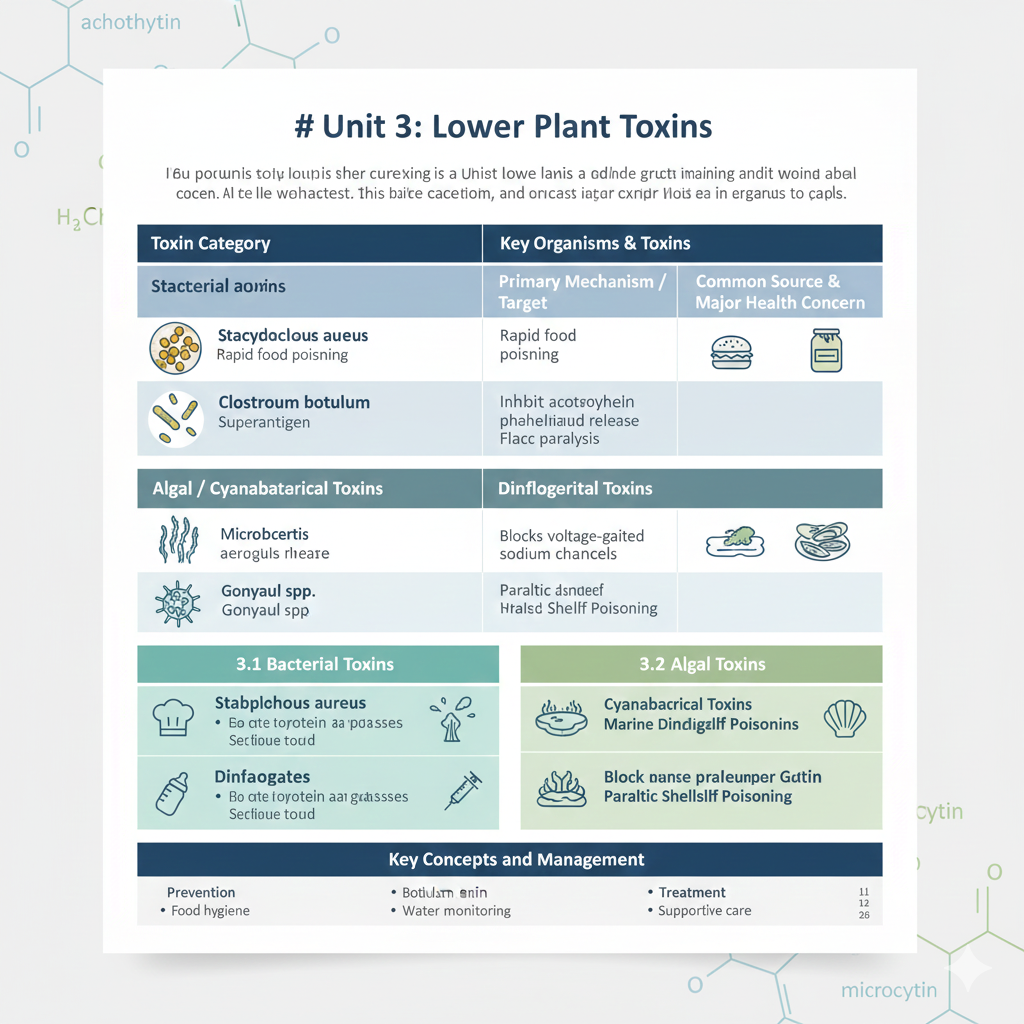
Lower Plant Toxins
Toxins produced by algae, cyanobacteria, ferns, and mosses. Cyanotoxins, phycotoxins, shellfish poisoning, and harmful algal bloom toxins — structures and mechanisms.
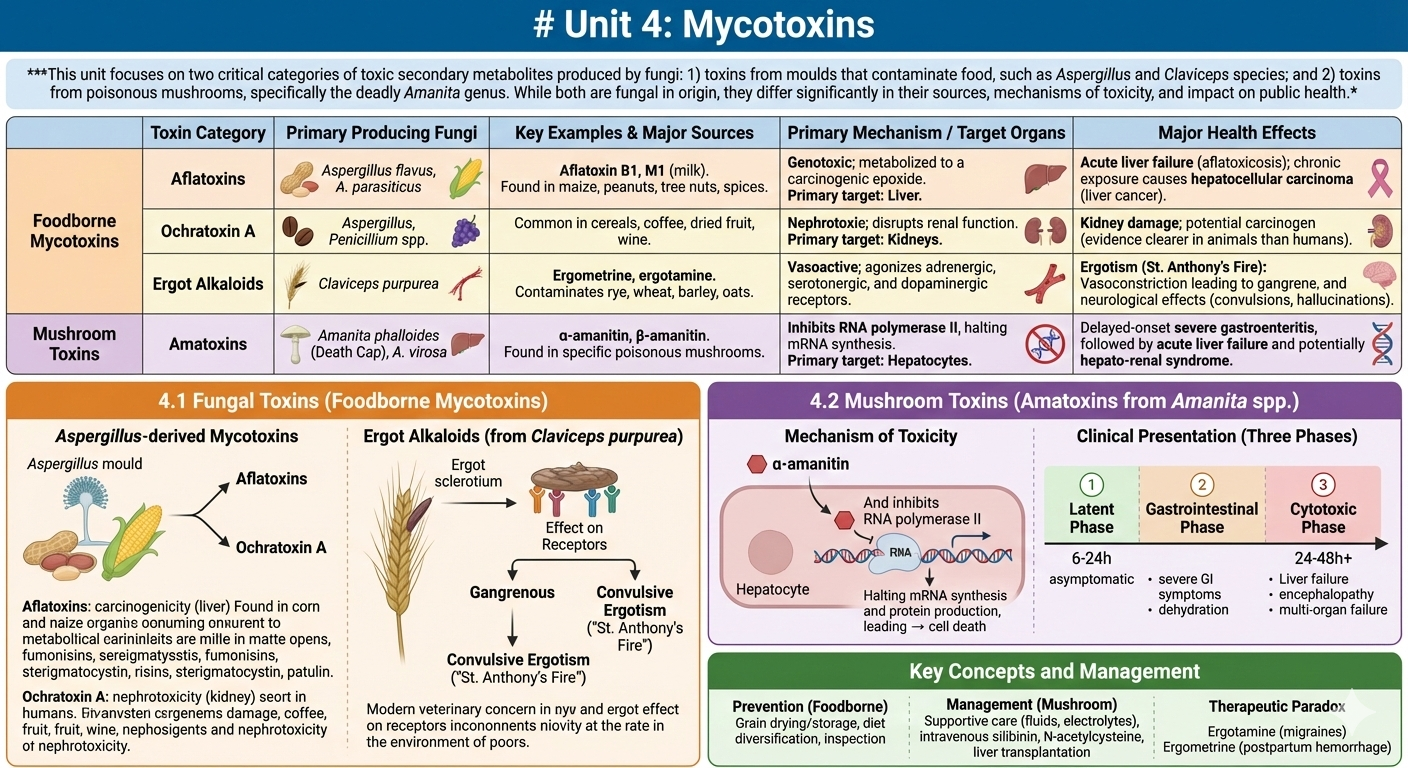
Mycotoxins
Aflatoxins, ochratoxins, fumonisins, trichothecenes, and zearalenone. Fungal biosynthesis, contamination of food and feed, carcinogenicity, and regulatory limits.
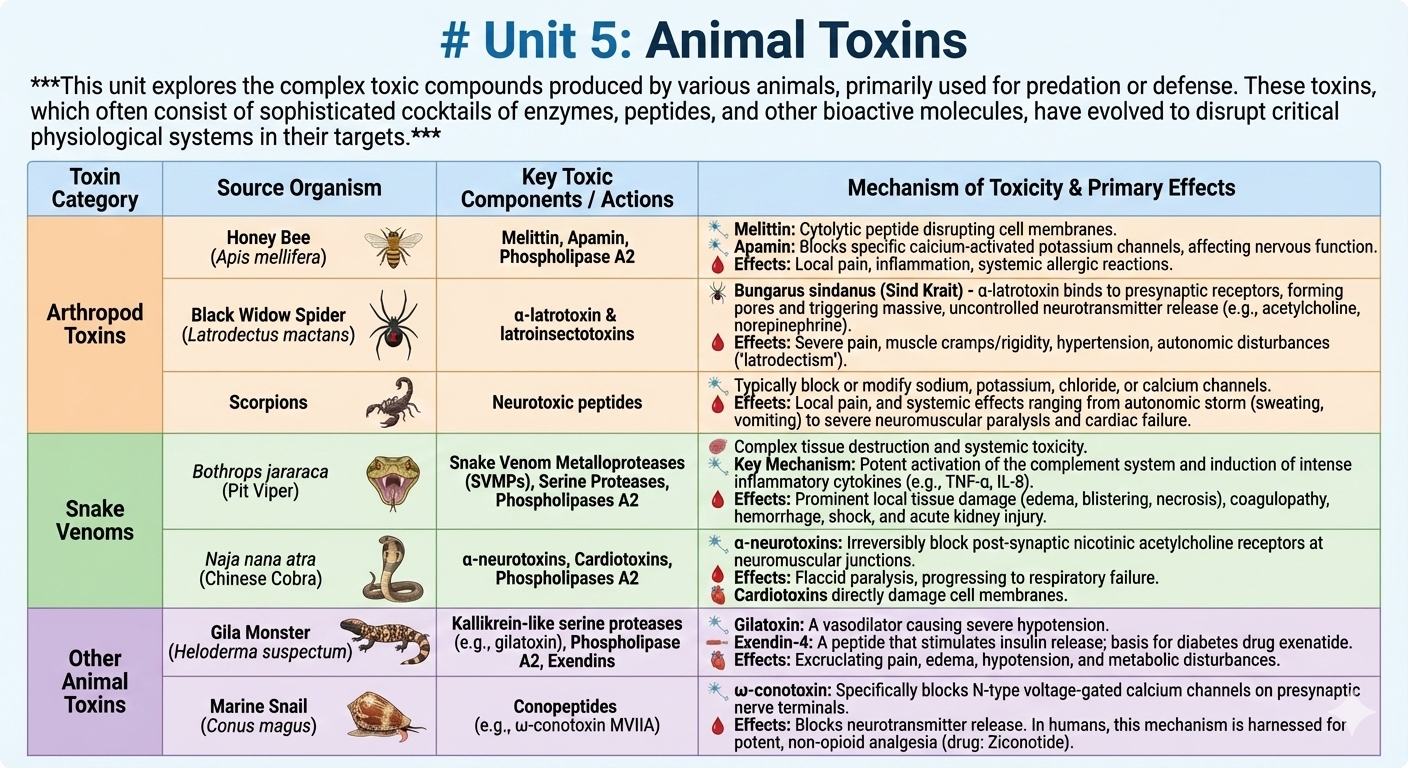
Animal Toxins
Venoms and toxins from snakes, scorpions, spiders, marine animals, amphibians, and insects. Neurotoxins, cytotoxins, hemotoxins — molecular targets and antivenom therapy.
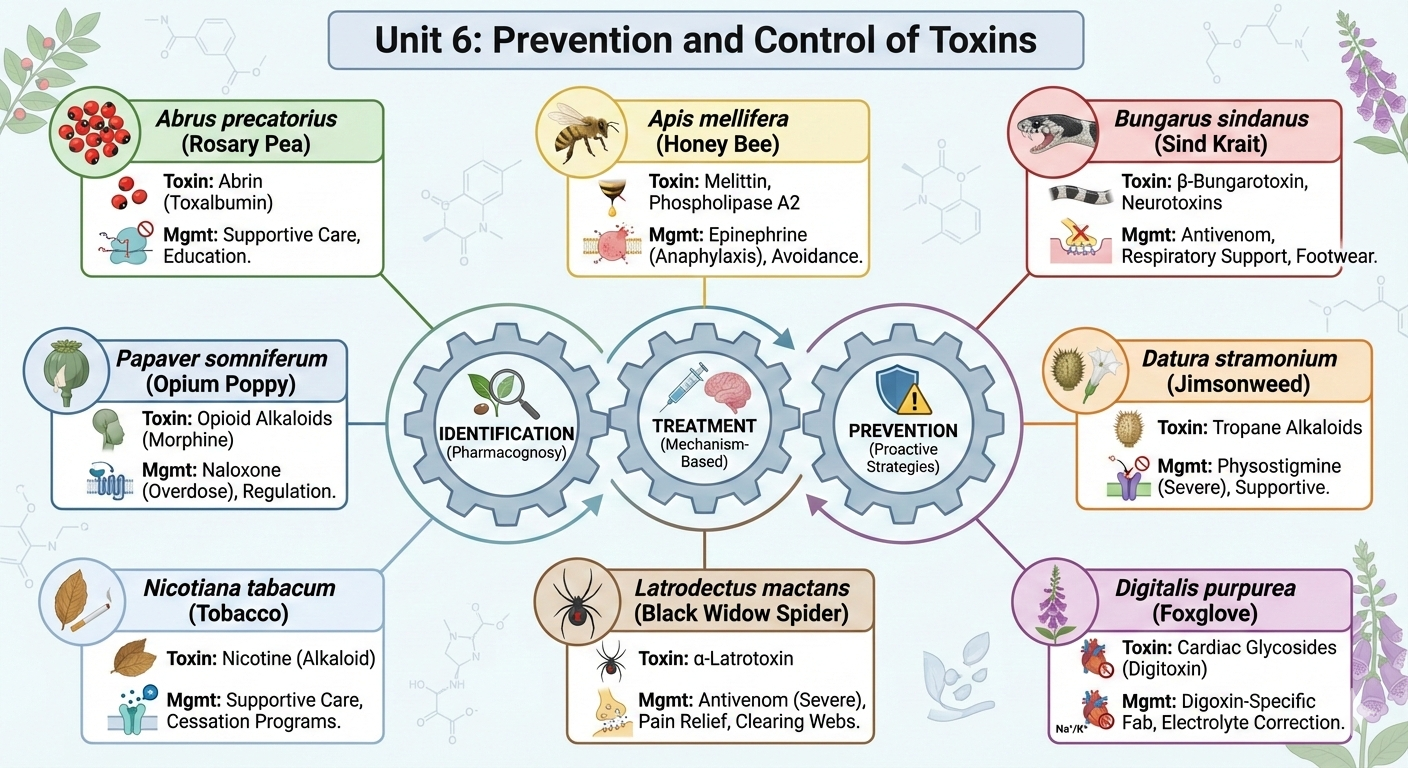
Prevention & Control
Detoxification strategies, regulatory frameworks, storage conditions, processing methods, biocontrol agents, and monitoring programs for natural toxin management.
Start with Unit 1 — Introduction to Natural Toxins and work your way up.